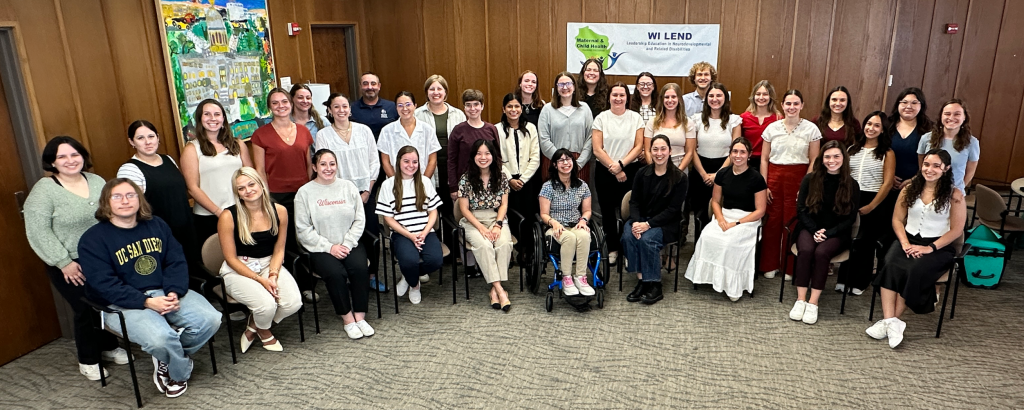
Developing leaders to improve services and supports for children with or at risk for neurodevelopmental disabilities.
Welcome to WI LEND
Applications for the 2026-2027 training year are now closed.
Important Dates
Orientation– Aug 25 & 26, 2026, full days
First seminar– Sep 4, 2026, afternoon
Skill-Building Workshop– Sep 25, 2026, morning
Leadership Development Workshop– Oct 30, 2026, morning
Leadership Development Workshop– Mar 12, 2027, morning
Graduation day– Apr 30 2027, full day
Trainee Spotlights
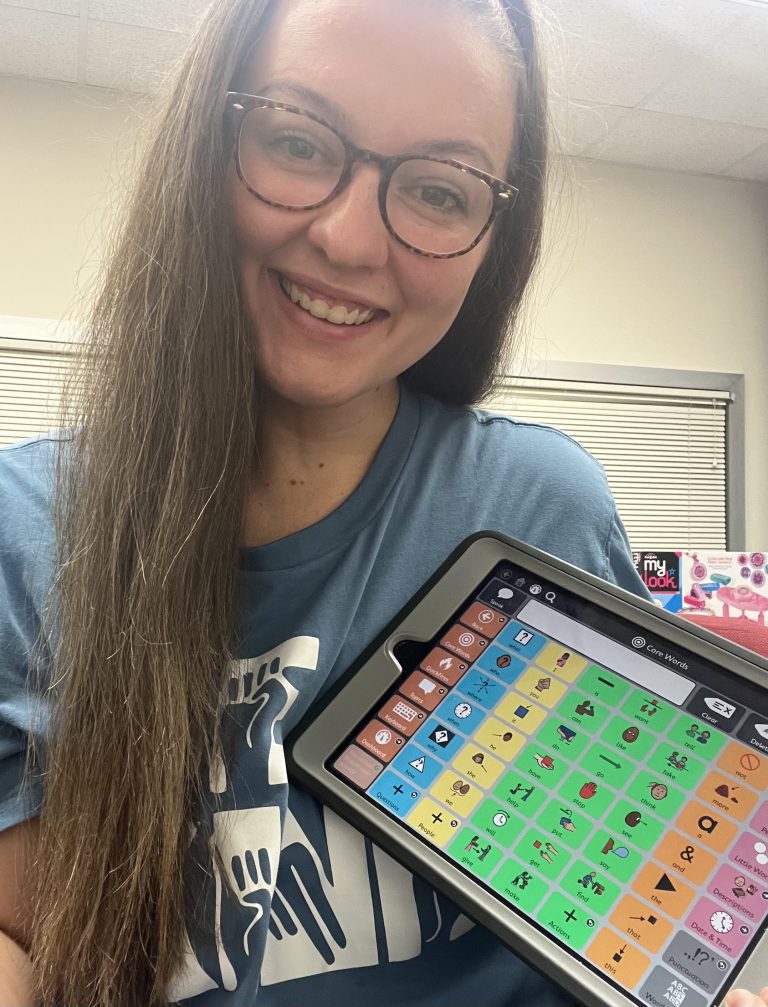
How LEND training shaped a Waisman CASC clinician’s approach to inclusive care and communication access
Communication is fundamental for participating in society. Without it, people struggle greatly to get their needs met, interact with others, and be a part of the world around them. Rebecca Stroschein, MS, CCC-SLP, speech language pathologist in Waisman’s Communication Aids and Systems Clinic (CASC), realized while volunteering as an undergraduate student at a non-profit for autistic adults, that she held a deep passion for helping others find a form of communication that works for them so that they can have access to their community.
Impact Stories
Family-Led Academic Grand (FLAG) Rounds: Family stories as a tool for teaching patient and family-centered care to medical trainees
Family-Led Academic Grand (FLAG) Rounds is a national, quarterly educational sessions done in collaboration between the University Center for Excellence in Developmental Disabilities (UCEDD) at the Waisman Center, the Department of Pediatrics at UW–Madison, and the Bluebird Way Foundation. FLAG Rounds were developed by Coleman and Danielle Gerber to use family faculty, or family members of children with complex medical needs as lecturers, and storytelling as a strategy to develop the knowledge, skills, and attitude in medical students and providers to dismantle ableism in pediatric care and partner with families in the care of their children. Each round is presented by 2-3 different family faculty, starting with their stories, and ending with their lessons.